


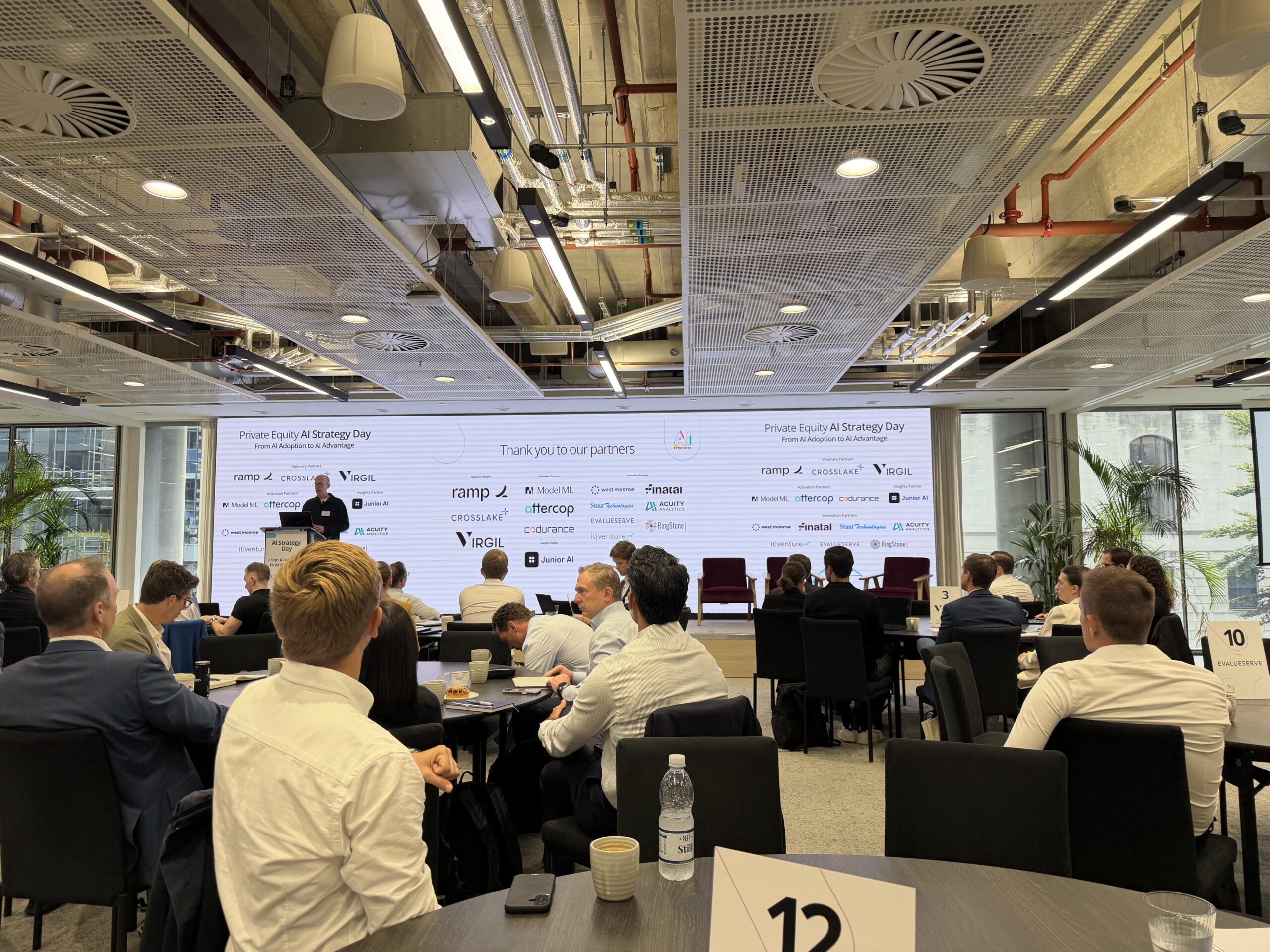
Finatal joined AI Pathfinder’s Private Equity AI Strategy Day in London earlier this week as an innovation partner, with Max Yish, Director, and Mark Leader, Associate Partner, attending from our Data & Technology team.
For us, the discussions had a direct connection to talent strategy. Businesses need people who can identify where AI will improve performance and take responsibility for making it work. That means building teams with the technical skills to deliver, supported by leaders who understand the commercial priorities.
It’s a theme Jake Grensinger, Executive Consultant, recently explored in his article on AI leadership and execution, drawing on Finatal’s work appointing embedded AI engineers and fund-level AI leadership. The emphasis is on bringing the right capability close to the business problem.
Practical lessons from across private equity
The event brought together private equity investors, operating partners, value creation leaders and technology specialists. Practitioner case studies and peer discussions formed the morning programme, followed by workshops focused on firm operations and portfolio value creation.
Suzanne Pike from ECI Partners discussed the firm’s experience building AI capability and the discipline required to translate adoption into business results. Benjamin Grether from BC Partners explored using AI to identify savings across portfolio-company spending. Other sessions examined changes to deal workflows and how businesses could build a stronger competitive position during the hold period.
Across those discussions, one theme kept coming back: businesses are finding ways to reduce manual work, while the financial value of that additional capacity needs closer examination. The agenda addressed this directly through sessions on measurable outcomes and credible AI investment cases.
Turning time saved into business value
Take a process where AI saves someone five hours a week. The commercial question is what happens to that time. Additional capacity might allow the team to serve more customers or support growth without increasing headcount at the same rate.
That distinction matters when assessing an investment. A team completing the same work more quickly has gained capacity, but the financial effect depends on how that capacity is used. Finance and the business owner need to agree how they will recognise the benefit and account for the cost of achieving it.
This also shapes the leadership brief. The person responsible needs to understand the workflow well enough to see where time is being lost and work with the team to change it. Measurement should be part of that work from the outset.
Establishing a credible investment case
Three practical priorities stood out:
- Start with the business problem. Understand which process needs to improve, what it costs today and what good performance looks like. Agree who owns the result before choosing the technology.
- Measure the whole investment. Assess changes in output and cost alongside the time saved. Include technology and vendor spend so the business can judge the return on the resources committed.
- Begin with focused use cases. Choose projects that can be implemented and assessed within a workable timeframe. Use the evidence to decide what deserves further investment.
Supporting growth without a proportionate increase in headcount gives management teams one way to assess the benefit. Customer experience and revenue generation also deserve attention, with measures suited to the work being done.
Building the team around the outcome
The implication for talent strategy is to define the work before opening a search. A fund assessing opportunities across its portfolio has a different requirement from a company hiring an engineer to improve a particular workflow. Jake’s article illustrates both through Finatal’s appointments at fund and portfolio-company level.
When assessing candidates, ask for a specific example of what they delivered and what happened after launch. Establish which decisions they personally owned, how colleagues used the work and how the business assessed the result. Those answers give a hiring team something concrete to test.
Before making the next AI investment, agree the business outcome and check whether the team has the capability and authority to deliver it. Build the hiring brief around any gaps, with clear responsibility for measuring progress.
To discuss the leadership and specialist talent needed to support your AI ambitions, get in touch with Finatal’s Data & Analytics team.